
Losing the Game Is Not a Defense to Running the Red Light
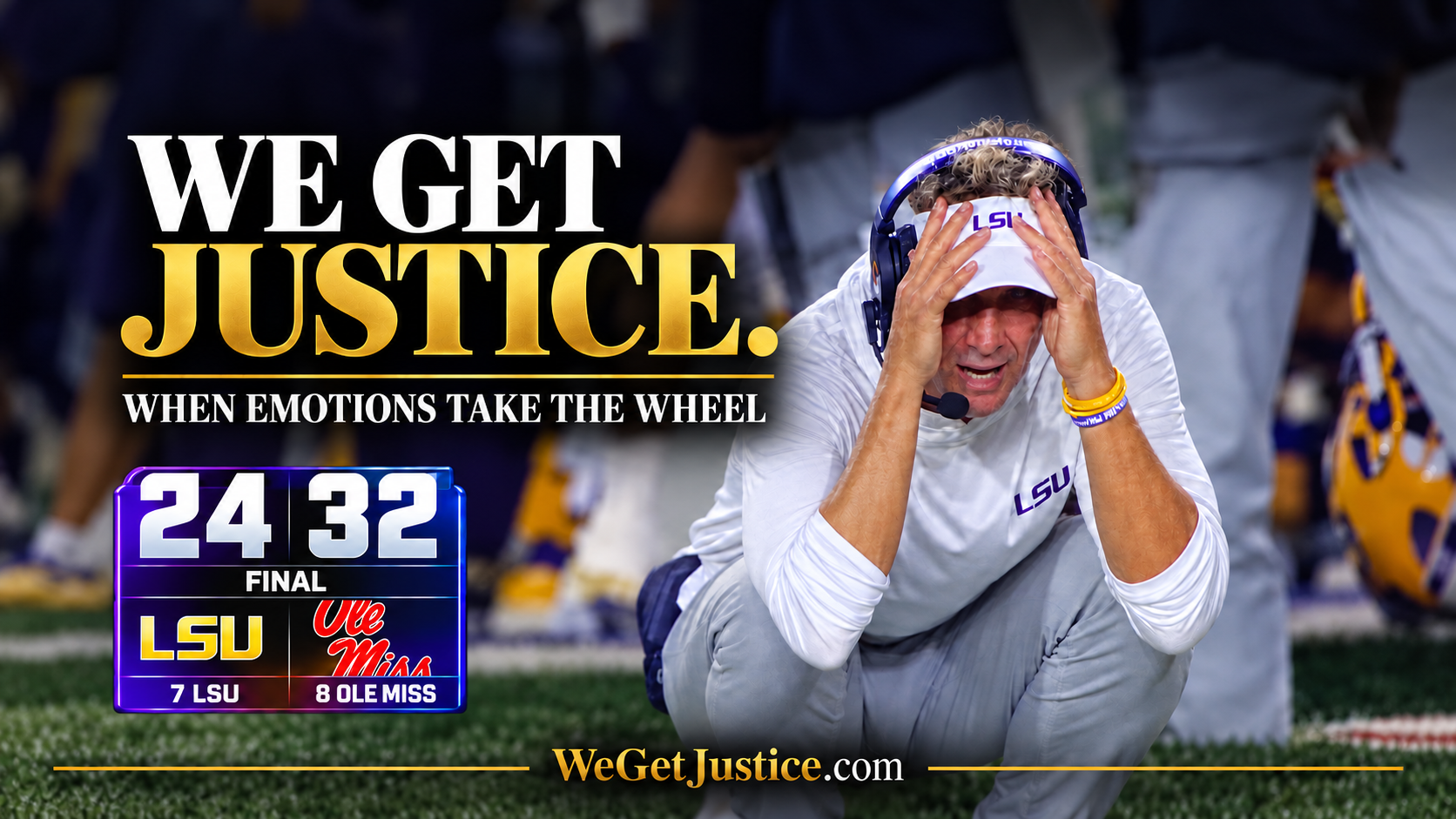
Imagine a random LSU football fan leaving the stadium after a heartbreaking 32–24 loss on Saturday night. They are stunned — replaying every bad play call and decision, unsure whether they really saw what they think they saw. Maybe they drank during the game. Maybe they had to take a “nerve pill.” Maybe they are simply angry, heartbroken, exhausted, and suddenly unsure about everything they once believed.
Is LSU’s head coach even a real person? Is the transfer portal merely a portal and not, in fact, a time machine capable of changing what just happened? Can anyone be trusted?
“Is that red light even real?”
That is the moment to hand over the keys.
If the fan drives anyway, runs the red light because the crisis of confidence followed them into the driver’s seat, and hurts somebody, they are no longer merely a disappointed football fan. They may become the defendant in a personal-injury lawsuit. The heartbreak may explain why the driver was distracted, impaired, or reckless. It does not excuse the harm the driver caused.
The same principle applies to serious losses and bad news away from the football field. A breakup, an argument, a death in the family, a frightening diagnosis, a job loss, or a sudden collapse of confidence can leave a person angry, panicked, distracted, exhausted, or questioning every decision that brought them to that moment.
Those reactions are human. But the duty to drive safely does not disappear during a personal crisis. Even when it is existential. An innocent person struck by the vehicle should not be required to pay for somebody else’s bad night, bad news, bad decisions, crisis of confidence, or misplaced faith in a another human being.
Most people understand that alcohol and driving do not mix. The same basic principle applies whenever a driver knows — or reasonably should know — that something is interfering with attention, judgment, coordination, reaction time, or control of the vehicle. Sometimes the safest decision after experiencing bad news, is to hand over the keys, call for a ride, sit still for a while, meditate, or simply wait until the disappointment, or disillusionment, dissipates.
Prescription Medication and the “Post Game-Nerve Pill” Problem
A medication does not become safe for driving merely because it was legally prescribed or because someone’s day just sucked. Anti-anxiety medications, sleep aids, pain medications, antihistamines, muscle relaxers, and many other drugs may cause drowsiness, slowed reaction time, dizziness, blurred vision, poor concentration, or impaired coordination.
Anger, Panic, Grief, and Emotional Shock
Being sad or angry does not automatically make a person negligent. The important question is whether the emotion has become so intense that it interferes with safe driving.
A person who is sobbing, shaking, consumed by rage, experiencing panic, replaying an argument, or staring at a phone instead of the road may not be capable of giving driving the attention it requires. Strong emotion can narrow attention and contribute to speeding, abrupt lane changes, tailgating, aggressive driving, or impulsive decisions.
The same concern applies after a serious loss or unexpected news. A person who feels disoriented, overwhelmed, or unable to concentrate should pause before starting the vehicle. A few minutes in a safe place — or a call to a friend, family member, taxi, or rideshare — can prevent a permanent tragedy.
A bad day is not a defense to distracted driving.
Arguments, Betrayal, and “Trust Issues”
Relationship trouble is not a medical diagnosis, and ordinary disappointment is part of life. Neither is suddenly questioning whether or not a Football Coach is or is not a good person. But a moving vehicle is a terrible place to continue a heated argument, read upsetting messages, investigate suspicions, demand answers from a passenger, or conduct an emotional postgame analysis.
No text message, breakup, betrayal, transfer, resignation, firing, coaching decision, or final score is important enough to justify taking attention away from the road. If the conversation or obsessive thoughts cannot wait, the vehicle should be safely parked first.
When the Decision to Drive May Become Negligence
Not every emotional or medicated driver is negligent, and negligence is always determined from the specific facts. But the decision to drive may become legally significant when a person knew — or reasonably should have known — that alcohol, medication, fatigue, distraction, or extreme emotion was interfering with safe operation and drove anyway.
The driver’s personal crisis is not a defense to careless driving. Depending on the facts, it may instead help explain why the driver failed to see a red light, crossed the centerline, followed too closely, drove too fast or aggressively, or reacted too slowly. When that failure injures another person, the impaired or distracted driver—and potentially the available liability insurer—may be responsible for the resulting damages.
After a Crash, Relevant Evidence May Include:
- alcohol or drug testing;
- prescription records and medication warnings;
- text messages, calls, or social-media activity near the time of the collision;
- witness descriptions of the driver’s behavior;
- witness descriptions of the driver, passengers, or vehicle—including, purely hypothetically, an unusual amount of purple and gold;
- admissions about drinking, medication, exhaustion, anger, or distraction;
- erratic driving captured by cameras or vehicle data; and
- the driver’s actions before and immediately after the wreck.
The collision may occur in a single moment, but the negligent choices often begin much earlier—sometimes before the engine is ever started. The safest driver is not always the person who handles a crisis perfectly. Sometimes it is the person who recognizes, “I am too upset to drive safely right now,” and stays out of the driver’s seat.
We Represent People Hurt by Drivers Who Should Not Have Been Driving
Roberts Wilson, P.A. Injury Lawyers represents people injured by drivers who got behind the wheel when they should not have—whether because of alcohol, impairing medication, fatigue, distraction, rage, emotional distress, or another condition that prevented safe driving.
We investigate what happened before the crash, preserve evidence, identify available insurance coverage, document the harm, and pursue accountability when another driver’s choices cause injury.
WE GET JUSTICE.
Roberts Wilson, P.A. Injury Lawyers
WeGetJustice.com
This article provides general information and is not legal or medical advice. Reading it does not create an attorney-client relationship. Every claim depends on its particular facts and applicable law.